

Venice has been an attractive area for the homeless, and is considered by many to be the new “skid row”. Easy access to drugs, alcohol and panhandling along the Venice Boardwalk has contributed to a significant increase in homeless and transients in the neighborhood.
In an effort towards positive community outreach we are encouraging residents and visitors to direct the homeless to local social services agencies. Most homeless shelters have restricted hours and may require an intake screening, and for the individual to check in and be monitored towards case management to improve their living situation. Please make note of the following agencies in Venice. If you know of one that is not listed here, please add it by filling out the form at the bottom of this page.
Bible Tabernacle Mission Shelter
1761 Washington Way
Venice, Ca 90291
310-821-6116
Intake requires a phone screen prior to entering the facility. Individual must have ID. Individual must agree to work towards self sufficiency. Intake hours daily 3:30 - 6 p.m.
Natiional Guard Armory Shelter
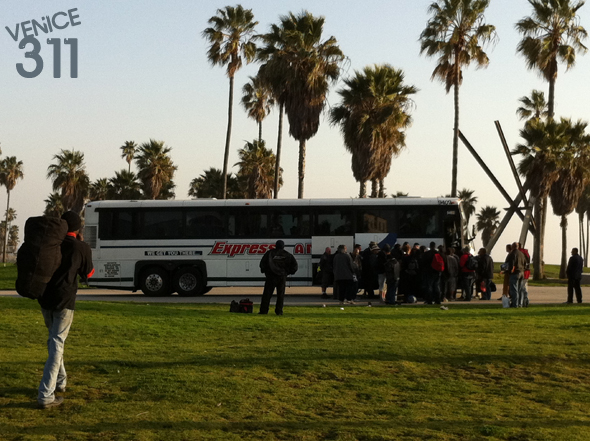
Emergency Shelter provided on a daily basis from Dec-March. To enter the shelter individuals MUST get on the shuttle pickup from 4:45 to 5:15 Daily at Market St. & Ocean Front Walk. Armory provides:
- Showers at 6 p.m.
- Dinner at 7 p.m.
- Lights Out 10 p.m.
- Warm sleeping area 10 p.m. to 6 a.m.
- Breakfast 6-7 a.m.
Daily bus to the National Guard Armory Shelter in Culver City
St. Josephs Center
204 Hampton Dr.
Venice, Ca 90291
(310) 396-6468
Homeless Service Center starts by providing basic services. Here, homeless men and women can make a reservation to eat at Bread and Roses Café, do a load of laundry, take a shower and have access to phone and mail service. Through meetings with our staff, they can also be connected with emergency shelter, medical care, and mental health and substance abuse treatment. They can also receive help with transportation and advocacy to apply for government benefits.
Homeless individuals who are ready to make long-term change may enroll in case management. Service plans developed jointly by the individual and the case manager assess each person’s strengths and needs and lay out a pathway to long-term stability and increased self-sufficiency by addressing issues such as permanent housing, job training, employment and ongoing treatment.


